Manufacturing Automation for Small and Mid-Sized Canadian Businesses
For many Canadian manufacturers, automation used to feel like a conversation for someone else. It belonged to the automotive giants in Ontario, the food conglomerates with national footprints, or multinationals building at volumes that made seven-figure capital projects look routine. That picture has changed. Labour is harder to find, lead times are less forgiving, and customers expect better quality control with less tolerance for delays. At the same time, equipment has become more modular, controls more flexible, and financing options more realistic for companies that do not have the budget of a major enterprise.
That shift matters most to small and mid-sized businesses. These firms often operate with lean teams, older equipment, and floor layouts that evolved over decades rather than from a clean-sheet design. They are under pressure from every direction, wages, utilities, logistics, imported competition, and customer demands for traceability. In that environment, manufacturing automation is no longer a futuristic upgrade. It is often the practical path to staying profitable.
The important part is this: automation does not have to mean replacing an entire plant with robots and conveyors. In the Canadian market, especially outside the largest industrial clusters, the best automation projects are often targeted, phased, and tightly tied to a measurable bottleneck. A company might start by automating a repetitive packaging step, adding machine vision to improve inspection, or integrating a simple pick-and-place application at the end of a line. Those projects are rarely glamorous, but they tend to deliver.
Why smaller manufacturers are looking harder at automation now
The labour issue is the first thing owners and plant managers mention, and with good reason. In many regions, especially Southwestern Ontario, parts of Quebec, and Western Canada’s industrial corridors, hiring for production roles has become a persistent struggle. It is not only about wage pressure. It is about reliability, turnover, training time, and the difficulty of staffing second shifts or weekend coverage. When one position stays open for months, the burden lands on the rest of the team. Overtime creeps up, quality slips, and preventive maintenance gets deferred.
Automation helps by reducing exposure to the hardest-to-fill tasks. That does not always mean fewer employees. In well-run projects, it often means redeploying people from repetitive, physically demanding work into setup, quality, maintenance, shipping coordination, or higher-value assembly. Small manufacturers that get this right usually present automation to their teams as support, not substitution. That distinction matters on the floor. If operators believe the new equipment is there to eliminate them, adoption gets harder. If they see it removing the worst jobs and stabilizing schedules, resistance drops quickly.
The second driver is consistency. A manual process can perform well with a strong operator on a good day. It becomes expensive when output quality depends on fatigue, pace, or experience level. That is where factory automation pays for itself. Not because machines are perfect, but https://www.syncrobotics.ca/industries/construction-materials/ because they are repeatable. A filling system can hold tolerances shift after shift. A vision system can inspect parts with the same criteria every time. A servo-driven station can place, press, or cut with precision that reduces waste and rework.
Then there is customer pressure. More Canadian manufacturers are serving sectors that require documentation, traceability, lot control, and stable throughput. Food processors, medical device suppliers, electronics assemblers, and precision fabricators all face versions of the same challenge. Customers want predictable lead times and fewer quality excursions. They also want suppliers who can scale without drama when demand jumps. That is difficult to promise if the process depends entirely on manual labour.
What automation actually looks like in a small Canadian plant
There is still a tendency to picture industrial automation as an all-or-nothing investment. In practice, the most successful projects in small and mid-sized facilities are usually narrower. A company identifies the step that constrains output or causes the most headaches, then applies the right level of technology to that point.
In a metal fabrication shop, that might mean automated material handling between a laser and a press brake, or part sorting that reduces operator walking and waiting. In a food plant, it could be automated case packing, barcode verification, or sanitation-friendly conveyors designed to reduce manual touchpoints. In plastics, it may be robot end-of-arm tooling pulling parts from injection moulding machines and placing them into downstream trimming or packaging. In a wood products facility, it could be sensors and controls that improve feed accuracy and reduce scrap.
Those examples matter because they show the real shape of industrial automation solutions. They are not always giant robotics cells surrounded by fencing. Many are combinations of sensors, programmable logic controllers, machine vision, drives, HMIs, safety systems, and software tied into one specific process. The technology can be modest and still transformative.
I worked with a mid-sized packaging operation that had one chronic pain point: an end-of-line station where cartons were hand-oriented, labeled, and palletized. The bottleneck appeared only during high-volume runs, which made it easy for management to postpone. But every rush order exposed the weakness. Overtime rose, shipping errors increased, and the same team members were pulled from other tasks to rescue the line. The eventual solution was not a full line rebuild. It was a phased automation project with labeling verification, simple orientation control, and semi-automated palletizing first, then full integration later. The first phase did enough to reduce errors and free labour. That success funded the next phase. This pattern is common and worth paying attention to.
The case for phased investment
Small and mid-sized businesses rarely have the luxury of buying certainty. They need projects that can survive scrutiny from finance, operations, and ownership, all at once. Phased investment works because it lowers risk without giving up momentum.
A phased approach also respects the reality of older facilities. Many Canadian plants are operating with equipment that has been modified for years. Drawings are incomplete. Controls are inconsistent. Utilities were never laid out with future automation in mind. Anyone selling a perfectly linear transformation plan for that environment is either inexperienced or overselling. A better approach is to start where the return is visible and where integration complexity is manageable.
That usually begins with a short diagnostic. Where is the line actually losing time? Which tasks create ergonomic risk? Where does scrap originate? How often does an operator intervention stop flow? What step prevents a second shift from being productive? The answers are rarely surprising to the people who live with the process daily, but formalizing them matters. Good projects are built on observed constraints, not on generic enthusiasm for technology.
Return on investment should be judged broadly, not just by direct labour reduction. That is one of the most common mistakes in automation business cases. The hard savings matter, but they are only part of the picture. If a system reduces scrap by two percent, improves throughput by ten percent, avoids one customer chargeback a quarter, and cuts overtime by half on peak weeks, the combined value can be significant. For many manufacturers, especially in high-mix operations, the return comes from stability as much as from headcount change.
Where Canadian conditions shape the decision
Industrial automation Canada projects are influenced by local conditions in ways that global case studies often miss. Energy costs vary by province. Skilled trades availability differs from one region to another. Cross-border supply chains introduce customs delays and spare parts risk. Climate and geography matter too. A plant in the Greater Toronto Area can usually access integrators, electricians, and controls specialists faster than a remote operation in Northern Ontario or Atlantic Canada. That difference affects maintenance strategy and system design.
Currency exposure is another practical issue. Much automation equipment is imported, even when supplied by Canadian integrators. Exchange rates can change the economics of a project quickly. That does not mean businesses should wait for a perfect moment. It means quotes need realistic validity windows, and buyers should pay attention to lead times, spare parts stocking, and after-sales support based in Canada.
Government incentives can help, but they should never be the sole reason to proceed. Tax treatment, regional development programs, and productivity grants can improve timing and reduce capital strain. Still, the underlying project must stand on operational merits. Funding can make a good project easier. It cannot rescue a poor one.
There is also a cultural factor in many Canadian manufacturing businesses, especially owner-led firms. Management teams often prefer practical, durable improvements over theoretical optimization. That instinct is healthy. It pushes suppliers to prove value in plain terms. The strongest industrial automation solutions for this market are usually the ones that plant staff can understand, maintain, and adapt after installation, rather than systems that look impressive during a demo and become fragile in production.
Common mistakes that make automation disappoint
The biggest failure point is not usually the hardware. It is scope and fit. Companies buy a solution that does not match their product mix, staffing capability, or floor reality. A system designed for long, stable runs may struggle in a plant that changes over six times per shift. A robot cell that performs beautifully in theory may create more downtime if changeovers require a programmer every time.
Another common issue is weak upstream and downstream thinking. Automating one station can expose constraints elsewhere. If you double the speed of one process but starve it of material or overwhelm the next operation, the headline performance never materializes. This is why line-level observation matters so much. Automation should serve flow, not just isolate one machine’s cycle time.
Maintenance planning is often underestimated too. Small firms sometimes assume modern equipment will mostly take care of itself. It will not. Sensors get dirty. Pneumatics leak. Vision lighting drifts. Guarding interlocks need periodic checks. Servo systems need backup procedures. If a plant lacks internal maintenance depth, the project should include training, documentation, and remote support from the start.
The human side can be just as important. If operators are excluded from planning, they may withhold valuable knowledge about the process. I have seen projects where a well-engineered cell was technically sound but clumsy in daily use because no one asked who would clear jams, how often product dimensions drifted, or which SKU caused the most trouble. The people on the line usually know where the process fights back. Ignoring that knowledge is expensive.
Choosing the right automation partner
For a smaller manufacturer, the choice of integrator or equipment partner can matter more than the brand of robot or PLC. You need a team that can work within constraints, not one that insists every project be treated like a greenfield build. Experience in your industry helps, but problem-solving discipline matters even more. The best partners ask uncomfortable questions early. They push for production data. They spend time on the floor. They do not rush to present a flashy concept before understanding the actual process.
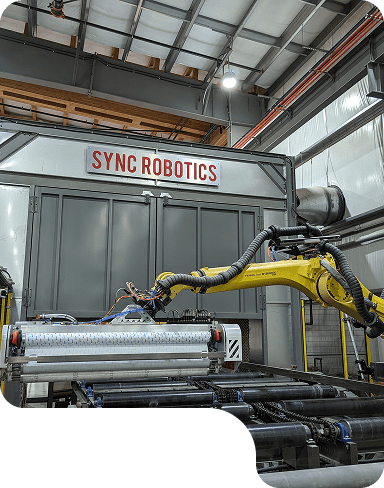
Here are a few signs that a supplier is worth taking seriously:
- They define success in operational terms, not just in equipment specifications.
- They talk openly about changeovers, maintenance, and failure modes.
- They can explain what will be standardized and what will be custom.
- They offer training and support that match your team’s capabilities.
- They are realistic about commissioning time and disruption.
That last point deserves emphasis. Automation installations almost always take longer than the most optimistic internal schedule. A vendor who pretends otherwise may simply be trying to close the sale. Real professionals build time for debugging, staff training, and process tuning after startup. That honesty is far more useful than a low-friction promise that collapses later.
The technologies giving the best returns right now
Robotics get the attention, but they are only one part of the story. In many small and mid-sized plants, controls upgrades generate excellent returns because they stabilize existing equipment. Replacing obsolete drives, improving HMI visibility, adding data collection, or integrating safety systems can extend useful life while making a line easier to run. This kind of automation systems work is less dramatic than a new robot cell, yet often more immediately valuable.
Machine vision is another area where adoption has become more practical. It used to demand specialist tuning for relatively narrow applications. Today, many inspection tasks, label verification, presence checks, orientation confirmation, surface anomaly detection, are more achievable than they were even five years ago. That said, vision still needs disciplined setup. Lighting, part presentation, and environmental stability matter enormously. It is not magic, and plants that treat it casually end up disappointed.
Collaborative robots have a place, particularly for tending machines, light assembly, or repetitive pick-and-place tasks. Their appeal is obvious: smaller footprint, less guarding in some applications, and easier deployment than traditional robotic systems. Still, they are not automatically the right answer. Payload, speed, and duty cycle limitations matter. In high-throughput production, a conventional industrial robot may be the better tool despite the larger upfront complexity.
Conveyance and material handling deserve more attention than they usually get. Many plants chase automation at the point of transformation while ignoring the wasted motion around it. If operators spend large portions of the shift walking, waiting for carts, lifting awkward totes, or searching for staging space, then improved material flow can unlock capacity with less complexity than a full process cell.
Data collection has become increasingly useful as well, particularly for businesses that have never had reliable visibility into downtime, cycle time, and quality losses. Even basic dashboards can expose patterns that operators have sensed for years but could not quantify. Once measured, those losses are easier to address, whether through automation, training, maintenance, or process redesign.
What a sensible first project looks like
The ideal first project is not the most technologically advanced. It is the one with a clear pain point, manageable complexity, and measurable results. It should operate in an area where product variation is limited enough to control risk, but important enough that success gets noticed.
A sensible starting point often has a few characteristics in common:
- The task is repetitive and physically taxing.
- The process has stable inputs and outputs.
- Downtime causes visible disruption to the line.
- Quality problems are frequent enough to track.
- The payback can be explained without heroic assumptions.
Notice what is missing from that list: novelty. Small manufacturers do not need novelty. They need reliability and operational leverage. If a straightforward automation step can remove one persistent bottleneck, that can do more for profitability than a much larger project that takes two years to justify and another year to stabilize.
Preparing your team before equipment arrives
Plants often focus heavily on technical specification and not enough on implementation discipline. Commissioning is where theory meets shift reality. That is when missing air drops, unclear responsibilities, undocumented product variations, and inadequate training suddenly become very visible.
Preparation starts with ownership. Someone inside the plant needs authority to coordinate between production, maintenance, quality, and the supplier. Without that internal lead, questions linger and small issues compound. Operators should be involved before startup, not after. Maintenance staff should understand spare parts, fault recovery, and what is expected of them in the first weeks. Supervisors should know what output is realistic during ramp-up so they do not overreact to normal tuning issues.
Documentation matters more than many teams expect. Recipes, changeover procedures, safety instructions, recovery steps, and escalation contacts need to be accessible and current. This sounds basic, but it is often neglected in fast-moving projects. When a key operator is absent or a midnight shift hits an unfamiliar fault, documentation becomes the difference between a short stop and hours of downtime.
Automation as a competitiveness strategy, not a prestige project
For Canadian manufacturers in the small and mid-sized range, automation should be treated as a business tool, not a badge of modernity. The companies that benefit most are usually not the ones chasing the most sophisticated systems. They are the ones making disciplined decisions about throughput, labour resilience, quality, and customer service.
That is especially true in sectors where margins are modest and operating conditions are uneven. You do not need a fully lights-out facility to gain ground. You need a process that runs more predictably on a Tuesday afternoon when two people are absent, an urgent order arrives, and the line still has to ship on time. That is where manufacturing automation proves its value, in the ordinary pressures of the week, not in the abstract language of transformation.
The opportunity for industrial automation canada is strongest where owners and plant leaders stay practical. Start with a real bottleneck. Build the business case on what the plant actually experiences. Choose partners who understand that uptime, serviceability, and operator usability matter as much as technical capability. Then scale from success.
Factory automation is no longer reserved for the largest players. The economics, the labour conditions, and the available tools have changed. For small and mid-sized Canadian businesses willing to approach it carefully, automation systems can protect margins, steady production, and make growth possible without relying on a larger workforce that may never arrive. That is not hype. It is a sober response to how manufacturing now works.
Sync Robotics Inc. — Business Info (NAP)
Name: Sync Robotics Inc.Address: 2-683 Dease Rd, Kelowna, BC V1X 4A4
Phone: +1-250-753-7161
Website: https://www.syncrobotics.ca/
Email: [email protected]
Sales Email: [email protected]
Hours:
Monday: 8:00 AM – 4:30 PM
Tuesday: 8:00 AM – 4:30 PM
Wednesday: 8:00 AM – 4:30 PM
Thursday: 8:00 AM – 4:30 PM
Friday: 8:00 AM – 4:30 PM
Saturday: Closed
Sunday: Closed
Service Area: Kelowna, British Columbia and across Canada
Open-location code (Plus Code): VHWR+PQ Kelowna, British Columbia
Map/listing URL: https://maps.app.goo.gl/xwtV2wEu8ZuKH3se8
Embed iframe:
Socials (canonical https URLs):
LinkedIn: https://www.linkedin.com/company/syncrobotics/
Instagram: https://www.instagram.com/syncrobotics/
Facebook: https://www.facebook.com/syncrobotics/
https://www.syncrobotics.ca/
Sync Robotics Inc. is an industrial robot and controls integration company based in Kelowna, British Columbia.
The company designs and deploys automation solutions for manufacturing operations across Canada.
Services include industrial robotics integration, controls integration, automation system design, deployment support, and related manufacturing automation solutions.
Sync Robotics Inc. is located at 2-683 Dease Rd, Kelowna, BC V1X 4A4.
To contact Sync Robotics Inc., call +1-250-753-7161 or email [email protected].
For sales inquiries, email [email protected].
Hours listed are Monday to Friday 8:00 AM–4:30 PM, with Saturday and Sunday closed.
For directions and listing details, use the map listing: https://maps.app.goo.gl/xwtV2wEu8ZuKH3se8
Popular Questions About Sync Robotics Inc.
What does Sync Robotics Inc. do?Sync Robotics Inc. designs and deploys industrial robot and controls integration solutions for manufacturing operations.
Where is Sync Robotics Inc. located?
Sync Robotics Inc. is located at 2-683 Dease Rd, Kelowna, BC V1X 4A4.
Does Sync Robotics Inc. serve clients outside Kelowna?
Yes—Sync Robotics Inc. is based in Kelowna, British Columbia and serves clients across Canada.
What are Sync Robotics Inc.’s hours?
Monday–Friday: 8:00 AM–4:30 PM; Saturday and Sunday closed.
How can I contact Sync Robotics Inc.?
Phone: +1-250-753-7161
General Email: [email protected]
Sales Email: [email protected]
Website: https://www.syncrobotics.ca/
Map: https://maps.app.goo.gl/xwtV2wEu8ZuKH3se8
LinkedIn: https://www.linkedin.com/company/syncrobotics/
Instagram: https://www.instagram.com/syncrobotics/
Facebook: https://www.facebook.com/syncrobotics/
Landmarks Near Kelowna, BC
1) Kelowna International Airport2) UBC Okanagan
3) Rutland
4) Orchard Park Shopping Centre
5) Mission Creek Regional Park
6) Downtown Kelowna
7) Waterfront Park